


How to Choose the Perfect Pearl Necklace

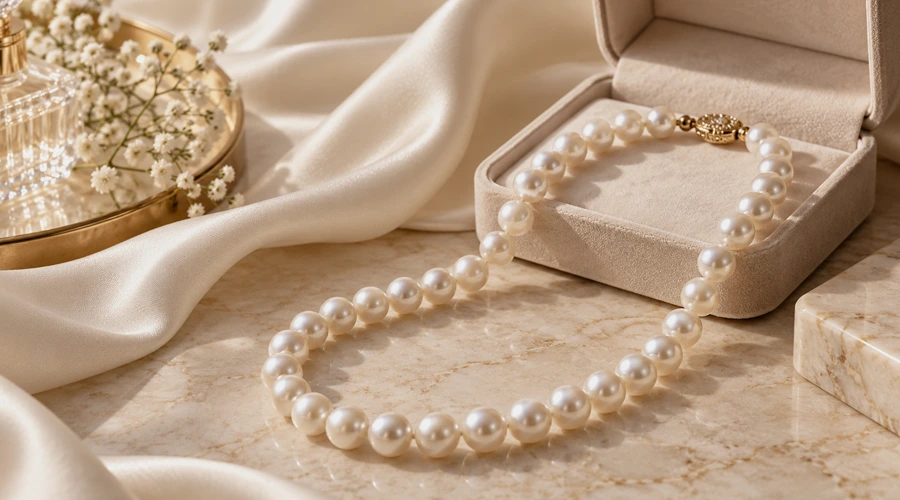
A pearl necklace has a rare quality in the world of jewelry: it can feel traditional, modern, romantic, minimal, and luxurious at the same time.
For decades, pearl necklaces were strongly associated with formal clothing and special occasions. Today, that idea has changed. Pearls are worn with evening dresses, tailored suits, simple shirts, knitwear, denim, and even casual everyday outfits.
That versatility is part of what makes them so appealing.
But choosing a pearl necklace is not simply about finding a strand that looks beautiful in a photograph.
Pearl type, size, color, shape, luster, necklace length, design, and even the way the pearls are matched can completely change how a necklace looks when worn.
A delicate pearl necklace may become an everyday favorite, while a dramatic South Sea pearl design can become the main feature of an evening look.
At Elegance Times, we believe luxury jewelry should feel personal rather than complicated. Our collection allows you to explore elegant pearl necklaces and other luxury jewelry styles designed for different tastes, wardrobes, and occasions.
This guide explains everything you should know before choosing a pearl necklace, from the different types of pearls to necklace lengths, styling ideas, quality, care, and gift considerations.
What Is a Pearl Necklace?
A pearl necklace is a piece of jewelry that includes one or more pearls arranged along a strand, chain, or decorative setting.
The most recognizable design is the classic strand of pearls, where multiple pearls are placed together around the neck.
However, modern pearl necklaces come in many different forms.
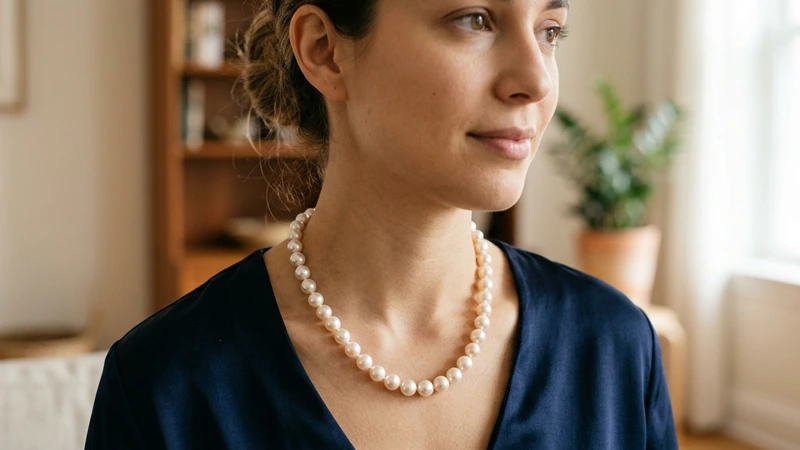
You may find:
- Classic single-strand pearl necklaces
- Pearl chokers
- Long pearl necklaces
- Pearl pendant necklaces
- Baroque pearl necklaces
- Gold and pearl necklaces
- Diamond and pearl necklaces
- Layered pearl necklaces
- Minimalist single-pearl designs
- Statement pearl necklaces
The design you choose can completely change the personality of the jewelry.
A perfectly matched strand of round white pearls creates a polished and traditional appearance.
Irregular baroque pearls can feel more artistic and contemporary.
A single pearl on a fine gold chain may feel minimal and easy to wear every day.
This is why “pearl necklace” describes much more than one traditional jewelry style.
Why Are Pearl Necklaces So Popular?
Pearl necklaces remain popular because they are unusually versatile.
Unlike some statement jewelry that only works with certain outfits, pearls can adapt to different styles.
A simple strand can complement a formal dress.
The same type of necklace can also look surprisingly modern when paired with a white shirt, blazer, knit sweater, or simple black top.
Pearls also have a softer visual character than many gemstones.
Diamonds tend to create sparkle.
Gold creates warmth and shine.
Pearls reflect light with a softer glow known as luster.
This makes them noticeable without always feeling overly dramatic.
Another reason for their popularity is the variety available today.
Pearls are not limited to perfectly round white designs. Different pearl types can appear in white, cream, pink, peach, lavender, silver, gray, green-toned, and golden colors.
Shapes can also range from round to oval, drop-shaped, button-shaped, and completely irregular baroque forms.
The result is a jewelry category that can work for people with very different personal styles.
Types of Pearl Necklaces
One of the first things to understand before buying a pearl necklace is that not all pearls are the same.
The major cultured pearl categories include Freshwater, Akoya, Tahitian, and South Sea pearls. Each has its own typical appearance, size range, colors, and character.
Understanding these differences makes comparing pearl necklaces much easier.
| Pearl Type | Typical Look | Style Personality | Good For |
|---|---|---|---|
| Freshwater Pearls | White and pastel tones, many shapes | Modern and versatile | Everyday wear and gifts |
| Akoya Pearls | Classic white, usually very round | Refined and traditional | Elegant and formal styles |
| Tahitian Pearls | Gray and darker natural tones | Bold and distinctive | Statement jewelry |
| South Sea Pearls | Large white, silver, or golden pearls | Luxurious and dramatic | High-end jewelry |
Freshwater Pearl Necklace
A freshwater pearl necklace is one of the most versatile ways to wear pearls.
Freshwater pearls are available in a wide range of shapes and colors.
You may see classic white freshwater pearls, but soft pink, peach, lavender, and other subtle colors are also common.
They can also have beautifully irregular forms.
This makes them particularly attractive for modern jewelry designs.
A perfectly symmetrical pearl can feel very classic, while an irregular freshwater pearl can create a more relaxed and artistic appearance.
Freshwater pearl necklaces work especially well for:
- Everyday jewelry
- Minimalist outfits
- Layered necklace combinations
- Romantic styles
- Bridal jewelry
- Luxury gifts
If you like the idea of pearls but do not want your jewelry to feel too formal, freshwater pearls are a good place to start.
Akoya Pearl Necklace
When many people imagine a classic pearl necklace, they are imagining something close to an Akoya pearl necklace.
Akoya pearls are particularly known for their round appearance and bright, reflective luster.
White and cream tones are especially recognizable.
A well-matched Akoya pearl strand can create a beautifully clean and sophisticated appearance.
This style works naturally with:
- Formal dresses
- Tailored clothing
- Business outfits
- Bridal looks
- Classic wardrobes
If your personal style is elegant, refined, and timeless, Akoya pearls are worth considering.
Tahitian Pearl Necklace
A Tahitian pearl necklace looks very different from a traditional white pearl strand.
Tahitian pearls are famous for their naturally darker body colors.
Although they are sometimes described as black pearls, their appearance can include gray, silver, green, brown, and other complex tones.
Some also show colorful overtones that become visible as light moves across the surface.
The darker color gives Tahitian pearls a stronger and more contemporary personality.
They work particularly well when you want your necklace to become a visible part of your outfit.
Try them with:
- Black dresses
- Minimalist clothing
- Evening outfits
- Tailored jackets
- Neutral colors
- Modern monochrome looks
Tahitian pearls are an excellent option for someone who likes pearl jewelry but wants something less traditional.
South Sea Pearl Necklace
South Sea pearls are known for their impressive size and luxurious appearance.
They are often found in white, silver, and golden tones and tend to have a softer, satin-like luster.
Because of their size and rarity, South Sea pearls often appear in high-end luxury jewelry.
A South Sea pearl necklace naturally creates more visual impact than a strand of smaller pearls.
That makes it particularly suitable for:
- Formal occasions
- Luxury gifts
- Evening events
- Statement jewelry
- Collectors of fine jewelry
If you prefer jewelry that feels substantial without relying on excessive decoration, larger South Sea pearls can be especially beautiful.
Freshwater vs Akoya vs Tahitian vs South Sea Pearls
If you are comparing different pearl necklaces, this quick guide can help.
| Feature | Freshwater | Akoya | Tahitian | South Sea |
|---|---|---|---|---|
| General Style | Versatile | Classic | Dramatic | Luxurious |
| Common Colors | White, pink, peach, lavender | White, cream | Gray, silver, green-toned | White, silver, golden |
| Typical Appearance | Many shapes | Round and refined | Dark and distinctive | Large and elegant |
| Everyday Wear | Excellent | Excellent | Depends on design | Depends on size |
| Statement Potential | Medium | Medium | High | High |
| Traditional Look | Medium | High | Low | Medium |
There is no single “best” pearl.
The best choice depends on the look you want.
Real Pearl Necklace vs Imitation Pearls
When shopping for pearl jewelry, you may come across terms such as real pearls, cultured pearls, natural pearls, and imitation pearls.
These terms should not be treated as interchangeable.
Cultured pearls are real pearls.
They form inside a mollusk after human assistance begins the pearl-producing process.
Natural pearls form without deliberate human intervention and are extremely rare in the modern jewelry market.
Imitation pearls, on the other hand, are manufactured products designed to resemble pearls.
For most people shopping for fine pearl jewelry today, cultured pearls are the relevant category.
Are Cultured Pearls Real Pearls?
Yes.
Cultured pearls are genuine pearls produced by mollusks.
The word “cultured” describes the way the pearl-growing process begins; it does not mean the finished pearl is artificial.
Major pearl categories such as Akoya, Tahitian, South Sea, and freshwater pearls are commonly available as cultured pearls.
How Can You Tell If a Pearl Necklace Is Real?
Trying to identify pearls at home can be difficult.
Online guides sometimes recommend simple tests, but no single home method should be treated as definitive when evaluating valuable jewelry.
Instead, look at the complete product information.
Important details include:
- Pearl type
- Size
- Shape
- Color
- Surface
- Luster
- Jewelry materials
- Product documentation
- Seller reputation
If authenticity has significant financial importance, professional examination is the safer approach.
A luxury purchase should be based on reliable information rather than a single internet trick.
Pearl Necklace Lengths
One of the most searched questions about pearl necklaces is surprisingly simple:
What pearl necklace length should I choose?
Length has a major effect on the final appearance.
The same pearls can feel youthful, classic, professional, or dramatic depending on where the necklace sits.
Common pearl necklace lengths generally include collar, choker, princess, matinee, opera, and rope styles. Current jewelry guides commonly describe princess lengths around 17–19 inches as one of the most versatile options.
| Necklace Style | Approximate Length | Overall Look |
|---|---|---|
| Collar | 12–13 inches | Close-fitting and dramatic |
| Choker | 14–16 inches | Modern and elegant |
| Princess | 17–19 inches | Classic and versatile |
| Matinee | 20–24 inches | Sophisticated and relaxed |
| Opera | Around 28–34 inches | Dramatic and formal |
| Rope | 36+ inches | Creative and layerable |
Actual fit will vary depending on body proportions and the individual necklace.
Pearl Choker Necklace
A pearl choker sits close to the neck.
It draws attention toward the face and collarbone and can feel surprisingly modern.
A pearl choker can work beautifully with:
- Strapless dresses
- Open necklines
- Simple T-shirts
- Blazers
- Evening wear
Smaller pearls can make a choker feel delicate.
Larger pearls create a stronger statement.
Princess Length Pearl Necklace
Princess-length necklaces generally sit around the collarbone.
This is one reason they are so versatile.
They work with many dresses, shirts, sweaters, and everyday outfits without requiring complicated styling.
If you are buying your first classic pearl strand and want something flexible, this is an easy length to consider.
Matinee Pearl Necklace
A matinee necklace falls lower on the chest than a traditional short pearl strand.
The additional length gives it a slightly more relaxed appearance.
It can work especially well with:
- High-neck clothing
- Business outfits
- Dresses
- Sweaters
- Layered necklace combinations
Opera Pearl Necklace
An opera-length pearl necklace creates more drama.
Because it hangs lower, the necklace becomes a larger part of the outfit.
It is particularly attractive with evening clothing and simple dresses where the jewelry has space to stand out.
Some longer strands can also be styled in more than one way depending on their construction.
Long Pearl Necklace
A long pearl necklace can feel elegant without looking overly traditional.
It can be worn as a single long strand or incorporated into a layered jewelry look.
Longer necklaces also work particularly well with simple monochrome clothing because the jewelry creates a strong vertical detail.
How to Choose a Pearl Necklace
The right pearl necklace is not simply the one with the largest pearls or the highest price.
A good choice should fit your style, wardrobe, occasion, and expectations.
Start with these questions:
- Do I want everyday jewelry or a special-occasion piece?
- Do I prefer classic or modern jewelry?
- Do I like perfectly round or organic shapes?
- Do I prefer smaller or larger pearls?
- What necklace length do I normally wear?
- Do I want white pearls or something more distinctive?
- Will I wear the necklace alone or layered?
- Does it need to coordinate with my other jewelry?
Once you answer these questions, comparing different necklaces becomes much easier.
How Is Pearl Quality Determined?
GIA uses seven pearl value factors: size, shape, color, luster, surface quality, nacre quality, and matching for pieces containing multiple pearls.
These factors give buyers a useful framework for understanding why two pearl necklaces that look similar at first may have very different appearances and values.
1. Pearl Size
Pearls are normally measured in millimeters.
Larger pearls generally create more visual impact.
However, bigger does not automatically mean better.
A smaller pearl with beautiful luster and an elegant design can be more attractive for everyday use than a very large pearl.
Consider size in relation to your personal style.
Smaller pearls: subtle, refined, easy to wear.
Medium pearls: balanced and versatile.
Large pearls: luxurious, visible, statement-making.
2. Pearl Shape
Pearls are not always perfectly round.
You may find:
- Round pearls
- Semi-round pearls
- Oval pearls
- Drop pearls
- Button pearls
- Baroque pearls
- Circled pearls
Round pearls have traditionally been highly valued, but irregular pearls have become an important part of contemporary jewelry.
Baroque pearls, in particular, can give a necklace a unique personality.
Their irregularity is part of the design rather than something that always needs to be hidden.
3. Pearl Color
Pearls exist in far more colors than many people realize.
Depending on the pearl type, colors may include:
- White
- Cream
- Pink
- Peach
- Lavender
- Silver
- Gray
- Green-toned
- Golden
A pearl may also display subtle secondary colors called overtones.
When choosing color, think about your wardrobe and existing jewelry.
White pearls are extremely versatile.
Creamier tones can create warmth.
Gray and darker pearls feel more dramatic.
Golden pearls naturally create a rich luxury appearance.
4. Pearl Luster
Luster is one of the most important visual characteristics of a pearl.
It describes the quality of light reflected from the pearl’s surface and from within its nacre layers.
Good luster gives a pearl depth and life.
When comparing pearl necklaces, do not focus only on size.
A smaller pearl with beautiful luster can be much more visually attractive than a larger pearl with a dull surface.
5. Surface Quality
Because pearls are organic gems, completely flawless surfaces are unusual.
Small marks or irregularities may be visible.
The important question is how noticeable those characteristics are and whether they affect the overall beauty of the pearl.
On a necklace, also consider the piece as a complete design rather than examining one pearl in isolation.
6. Nacre
Nacre forms the characteristic pearl surface and plays an important role in appearance and durability.
Quality evaluation considers the condition and appearance of the nacre as part of the complete pearl.
7. Matching
Matching is particularly important in a traditional pearl strand.
Pearls may be selected to coordinate in:
- Size
- Color
- Shape
- Luster
- Surface appearance
However, perfect uniformity is not always the goal.
Modern designers may intentionally combine different shapes, sizes, or colors.
The important thing is whether the variation appears intentional and balanced.
What Pearl Size Should I Choose?
Pearl size can dramatically change how a necklace feels.
Smaller pearls often look refined and understated.
Larger pearls naturally attract more attention.
For everyday use, many people prefer pearls that do not overwhelm their clothing.
For an evening event, larger pearls can create a stronger focal point.
Think about scale.
A small pearl pendant on a fine chain creates an entirely different impression from a full necklace made with large pearls.
Neither is better.
They simply serve different purposes.
How to Style a Pearl Necklace
One of the biggest misconceptions about pearl necklaces is that they only work with formal clothing.
Modern styling proves otherwise.
Pearls can be paired with casual clothing, professional outfits, evening dresses, and contemporary layered jewelry combinations.
Pearl Necklace With a White Shirt
This may be one of the easiest combinations to wear.
A white shirt creates a clean background that allows pearls to stand out without looking overly formal.
You can wear the shirt slightly open at the neckline with a short pearl necklace or pendant.
Add tailored trousers for work or jeans for a more relaxed outfit.
Pearl Necklace With a T-Shirt
A simple T-shirt changes the mood of pearl jewelry immediately.
The contrast between relaxed clothing and refined jewelry makes the pearls feel more modern.
Try:
White T-shirt + pearl necklace + jeans + simple watch
The result is polished without looking like you are dressing for a formal event.
Pearl Necklace With a Blazer
Pearls naturally work well with tailored clothing.
A simple strand under a blazer can create an elegant professional look.
For something more contemporary, combine a shorter pearl necklace with a delicate gold chain.
Pearl Necklace With a Black Dress
Few combinations are as reliable as pearls and a black dress.
The contrast makes white or cream pearls particularly visible.
With a minimalist dress, the necklace can become the main decorative detail.
For an evening event, you can choose larger pearls, longer strands, or a pearl design combined with diamonds.
Pearl Necklace With Evening Wear
Formal events give you more freedom to choose dramatic jewelry.
Consider:
- Larger pearls
- Long pearl necklaces
- Diamond and pearl designs
- Multi-strand necklaces
- South Sea pearls
- Tahitian pearls
If the necklace is very detailed, keep other jewelry slightly more restrained.
Balance usually creates a more luxurious result than wearing several statement pieces at once.
How to Layer Pearl Necklaces
Layering is one of the easiest ways to make pearl jewelry feel contemporary.
You do not necessarily need several pearl necklaces.
Pearls can be combined with:
- Fine gold chains
- Pendant necklaces
- Minimalist chains
- Different pearl lengths
- Diamond necklaces
- Mixed-metal jewelry
Current styling guides commonly recommend varying necklace lengths so that each layer remains visible rather than allowing several pieces to sit directly on top of one another.
For example:
Layer 1: short pearl necklace
Layer 2: delicate gold chain
Layer 3: longer pendant necklace
The differences in texture make the combination visually interesting.
Can You Wear a Pearl Necklace Every Day?
Absolutely.
The key is choosing a design that fits your lifestyle.
For frequent use, consider:
- Comfortable length
- Moderate pearl size
- Secure clasp
- Versatile color
- Simple design
A delicate pearl pendant or short freshwater pearl necklace can move easily between casual clothing, work outfits, lunches, dinners, and social events.
You do not need to wait for a wedding or formal invitation to wear pearls.
Pearl Necklace for Weddings
Pearls and bridal styling have a natural connection.
Their soft glow works beautifully with many wedding fabrics and dress styles.
However, bridal pearl jewelry does not have to be traditional.
A bride may choose:
- Classic pearl strand
- Pearl choker
- Single pearl pendant
- Pearl and diamond necklace
- Baroque pearl necklace
- Minimalist pearl design
The neckline of the dress should help guide the choice.
An open neckline gives a statement necklace more space.
A detailed neckline may look better with a simpler piece.
Pearl Necklace as a Gift
A pearl necklace can be an excellent luxury gift because it feels personal without requiring an exact ring size.
However, you should still consider the recipient’s style.
Look at the jewelry they already wear.
Do they prefer:
- Gold or white metals?
- Minimalist or bold jewelry?
- Short or long necklaces?
- Classic or modern designs?
- Small or large gemstones?
If you are unsure, a refined, versatile pearl necklace is generally easier to style than an oversized statement piece.
Pearls can be especially meaningful gifts for birthdays, anniversaries, weddings, graduations, and other important occasions.
Explore Pearl Necklaces at Elegance Times
If you are looking for a pearl necklace for yourself or as a gift, explore the jewelry selection at Elegance Times.
Compare different styles, proportions, pearl designs, and luxury aesthetics before deciding.
The best luxury jewelry is not simply something beautiful in a box. It is something you naturally want to wear again and again.
How Much Does a Pearl Necklace Cost?
The price of a pearl necklace can vary enormously.
There is no meaningful single price for “a pearl necklace” because many characteristics influence value.
Important factors include:
- Pearl type
- Pearl size
- Luster
- Shape
- Surface quality
- Nacre
- Matching
- Necklace length
- Precious metal
- Diamonds or other gemstones
- Design complexity
- Craftsmanship
- Brand
- Collection
This is why comparing two pearl necklaces only by price can be misleading.
Instead, compare pieces with similar characteristics.
A freshwater pearl necklace and a large South Sea pearl necklace may belong to completely different price categories even if both appear relatively simple.
Are Pearl Necklaces Still in Style?
Yes, but the way pearls are styled continues to evolve.
The traditional single strand remains relevant, while contemporary jewelry has introduced baroque shapes, layered pearls, gold-and-pearl combinations, pearl chokers, and more casual styling.
Modern fashion often uses pearls as contrast.
Instead of pairing them only with formal dresses, they may be worn with denim, knitwear, oversized shirts, or simple T-shirts.
This gives pearl jewelry a much broader role in a modern wardrobe.
Gold and Pearl Necklace
A gold and pearl necklace combines two classic jewelry materials.
The warmth of gold creates a beautiful contrast with the softer glow of pearls.
This combination can range from very minimal to highly decorative.
A small pearl pendant on a fine gold chain can work perfectly for everyday wear.
A more detailed gold necklace with multiple pearls can create a stronger luxury appearance.
If most of your existing jewelry is yellow gold, choosing pearls combined with gold can also make your collection easier to coordinate.
Pearl and Diamond Necklace
Pearls and diamonds create very different types of light.
Pearls offer a soft glow, while diamonds add sharper sparkle.
Combining the two can create an elegant balance.
A pearl and diamond necklace is particularly well suited to:
- Evening events
- Luxury gifts
- Bridal jewelry
- Formal occasions
- Statement looks
The design does not need to be large.
Even a small diamond detail beside a pearl can create a beautiful contrast.
White Pearl Necklace or Colored Pearls?
White pearls are a classic choice because they are easy to combine with many colors.
They work with black, white, beige, navy, gray, pastel shades, and bold colors.
But they are far from the only option.
Colored pearls may create a much more distinctive piece.
Consider:
Pink or peach: soft and romantic
Lavender: contemporary and delicate
Gray: modern and sophisticated
Dark Tahitian tones: dramatic and luxurious
Golden South Sea pearls: warm and high-impact
Choose based on what you will actually wear rather than what feels most traditional.
Baroque Pearl Necklace
A baroque pearl necklace uses pearls with irregular shapes.
No two baroque pearls have exactly the same appearance.
This gives the jewelry an organic and artistic quality.
Baroque pearls work particularly well with contemporary fashion because they feel less formal than perfectly matched round strands.
Try a baroque pearl necklace with:
- Linen
- Minimalist dresses
- Oversized shirts
- Knitwear
- Gold chains
- Casual tailoring
If classic pearls feel too traditional for your taste, baroque pearls may completely change your opinion.
Minimalist Pearl Necklace
Minimalist pearl necklaces are among the easiest designs to incorporate into everyday outfits.
A fine chain with one pearl can be worn almost like a regular pendant.
It works with:
- Office clothing
- T-shirts
- Dresses
- Sweaters
- Other necklaces
Minimalist designs are also useful if you already wear several pieces of jewelry and do not want the necklace to dominate the look.
How to Care for a Pearl Necklace
Pearls require more careful treatment than many harder gemstones.
GIA notes that pearls are relatively soft and can be damaged by scratching, excessive heat, acids, perfumes, cosmetics, hairspray, and other chemicals. It also advises against ultrasonic and steam cleaning.
A simple routine can help protect your necklace.
Put Pearls on After Perfume and Makeup
Finish applying:
- Perfume
- Hairspray
- Makeup
- Skincare products
before putting on your necklace.
This reduces direct exposure to products that may affect the pearl surface.
Wipe Pearls After Wearing
After wearing your necklace, gently wipe the pearls with a very soft clean cloth.
This simple habit helps remove substances left on the surface during wear.
Store Pearls Carefully
Do not throw a pearl necklace into a jewelry box where it can rub against harder pieces.
Diamonds, gemstones, and metal edges may scratch the pearl surface.
Store pearl jewelry separately or in a soft protective compartment.
Avoid Ultrasonic and Steam Cleaners
These cleaning methods are not appropriate for pearls.
When deeper cleaning is required, follow appropriate pearl-care instructions and consider professional jewelry cleaning for valuable pieces.
What to Look for When Buying a Pearl Necklace Online
Buying pearl jewelry online gives you access to a much wider range of designs.
But photographs alone should not determine your decision.
Review the complete product page.
Look for information about:
- Pearl type
- Pearl size
- Necklace length
- Materials
- Clasp
- Design
- Available photographs
- Brand
- Product specifications
Pay particular attention to scale.
Close-up photography can make pearls appear much larger than they are.
Measurements give you a better idea of how the necklace will actually look when worn.
Choosing a Pearl Necklace for Your Personal Style
You do not need complicated fashion rules.
Start with your wardrobe.
| Your Style | Pearl Necklace to Consider |
|---|---|
| Minimalist | Single pearl pendant or small pearls |
| Classic | Round white pearl strand |
| Modern | Pearl choker or mixed-material necklace |
| Romantic | Freshwater pearls in soft tones |
| Bold | Tahitian pearls or larger pearls |
| Luxury | South Sea pearls or pearl and diamond designs |
| Casual | Baroque or delicate freshwater pearls |
| Formal | Matched round pearls or statement designs |
The goal is not to find the necklace that looks most impressive on its own.
The goal is to find one that feels like it belongs in your life.
Frequently Asked Questions About Pearl Necklaces
What is the best type of pearl necklace?
There is no single best type.
Freshwater pearls are versatile, Akoya pearls offer a classic appearance, Tahitian pearls create darker statement looks, and South Sea pearls are known for their larger size and luxurious character.
The right choice depends on your style and budget.
What is the most classic pearl necklace?
A relatively short strand of round white pearls is generally considered the classic pearl necklace style.
Akoya pearls are particularly associated with this look.
What pearl necklace length is best?
Princess-length necklaces around the collarbone are among the most versatile options.
However, shorter chokers can feel more modern, while matinee and opera lengths create a longer and more dramatic appearance.
Can I wear pearls every day?
Yes.
Choose a comfortable and versatile design and take proper care of the pearls.
Delicate pearl necklaces and smaller strands can work particularly well for everyday use.
Are freshwater pearls real?
Yes.
Cultured freshwater pearls are genuine pearls produced inside freshwater mollusks.
Are cultured pearls fake?
No.
Cultured pearls are real pearls.
The pearl-forming process is initiated with human assistance, but the pearl itself forms inside the mollusk.
What is a baroque pearl necklace?
A baroque pearl necklace uses irregularly shaped pearls.
These natural-looking shapes give the necklace a more organic and modern appearance.
What color pearl necklace should I choose?
White is the most versatile choice, but cream, pink, peach, lavender, gray, dark Tahitian tones, and golden pearls can create more distinctive looks.
Choose a color that works with your skin tone, wardrobe, and existing jewelry.
How should a pearl necklace fit?
The answer depends on the style.
Chokers sit close to the neck, princess necklaces fall around the collarbone, and longer matinee or opera necklaces fall lower on the chest.
Always check the actual necklace measurement before purchasing.
Can I wear a pearl necklace with jeans?
Yes.
Pearls paired with jeans and a simple shirt or T-shirt can create a polished modern outfit.
This contrast is one of the easiest ways to make traditional-looking pearls feel casual.
Can pearl necklaces be layered with gold chains?
Yes.
Pearls and fine gold chains work beautifully together.
Choose different necklace lengths so each layer remains visible.
Are pearl necklaces good gifts?
Yes.
They can be meaningful luxury gifts for birthdays, anniversaries, graduations, weddings, and special occasions.
Consider the recipient’s preferred jewelry style before choosing the design.
How do I clean a pearl necklace?
For regular care, gently wipe the pearls with a very soft clean cloth after wearing.
Avoid harsh chemicals, steam cleaners, and ultrasonic cleaners.
For valuable jewelry that needs more extensive cleaning, professional advice is recommended.
Which pearl necklace looks most luxurious?
Luxury is not determined by one characteristic alone.
Large South Sea pearls can create an impressive appearance, while exceptionally well-matched Akoya pearls may look beautifully refined.
Design, luster, pearl quality, craftsmanship, and the overall composition all matter.
Find Your Pearl Necklace at Elegance Times
A pearl necklace is one of those rare pieces of jewelry that can evolve with your style.
It can begin as something you wear to an important event and eventually become part of your everyday wardrobe.
It can be classic without feeling old-fashioned.
Luxurious without being excessive.
Simple without being forgettable.
The key is choosing the right combination of pearl type, size, shape, color, necklace length, and design.
If you prefer traditional elegance, a strand of round white pearls may feel perfect.
If your style is modern, consider baroque pearls, a short pearl choker, or a necklace combining pearls with gold.
If you want something dramatic, Tahitian or larger South Sea pearls may create the visual impact you are looking for.
And if you are buying a gift, focus less on choosing the largest or most expensive necklace and more on finding a piece that reflects the person’s actual style.
At Elegance Times, you can explore pearl necklaces and luxury jewelry created for elegant, modern, and timeless wardrobes.
Compare different designs.
Look closely at the proportions.
Think about how you will wear the necklace rather than simply how it looks in the box.
Because the best piece of luxury jewelry is rarely the one you admire once.
It is the one you continue reaching for years later.
Explore the pearl necklace collection at Elegance Times and discover a piece that feels naturally connected to your personal style.